
Local Partner Capacity Assessments and Strengthening

We assist international donor agencies and private-sector investors in:

  • Baseline Assessment/Mapping: Identifying a list of viable local partners for specific types of interventions at the national, regional, and/or sub-regional level;
  • Organizational Capacity Assessments (OCA): Determining what types of technical or management capacity strengthening these viable local partners might need to be successful; and
  • Risk-Based Capacity Development Plans/Strategies: Using the information from the OCA  to inform the development and execution of a strategic plan for strengthening the most critical core capacities.

This  three-phase model:

  • Helps donors and private-sector partners capitalize on the existing capacity of local partners as well as on all of the skills and capacity that they developed by working with other donors and investors;
  • Enables local groups to know when and how to scale up; and
  • Strengthens the chances that these new capacities can be sustained.

ACSD is uniquely qualified to help international donors and investors to support this type of integrated local partnership co-development process.

  1. Our team includes some of West Africa’s leading experts on each stage of local capacity strengthening (Table A).
  2. We were also the first Africa-based firm to be selected (in May 2024) to pilot-test this new three-phase model in West Africa through the USG-funded LCapS Project, which:
    • Identified and assessed the capacity of the USG’s current, past, and potential partners at a national scale with a special focus on the eight regions where the USG has been and continues to be most active in Burkina Faso; and
    • Used the needs identified in the baseline census and OCA survey to inform the development of:
      • Five training modules; and
      • Two MEAL systems for: 1) adjusting the contents of the training modules to local partners with different levels of capacity; and 2) making “real-time” adjustments (based on stakeholder feedback) to adjust the training content to the audience.

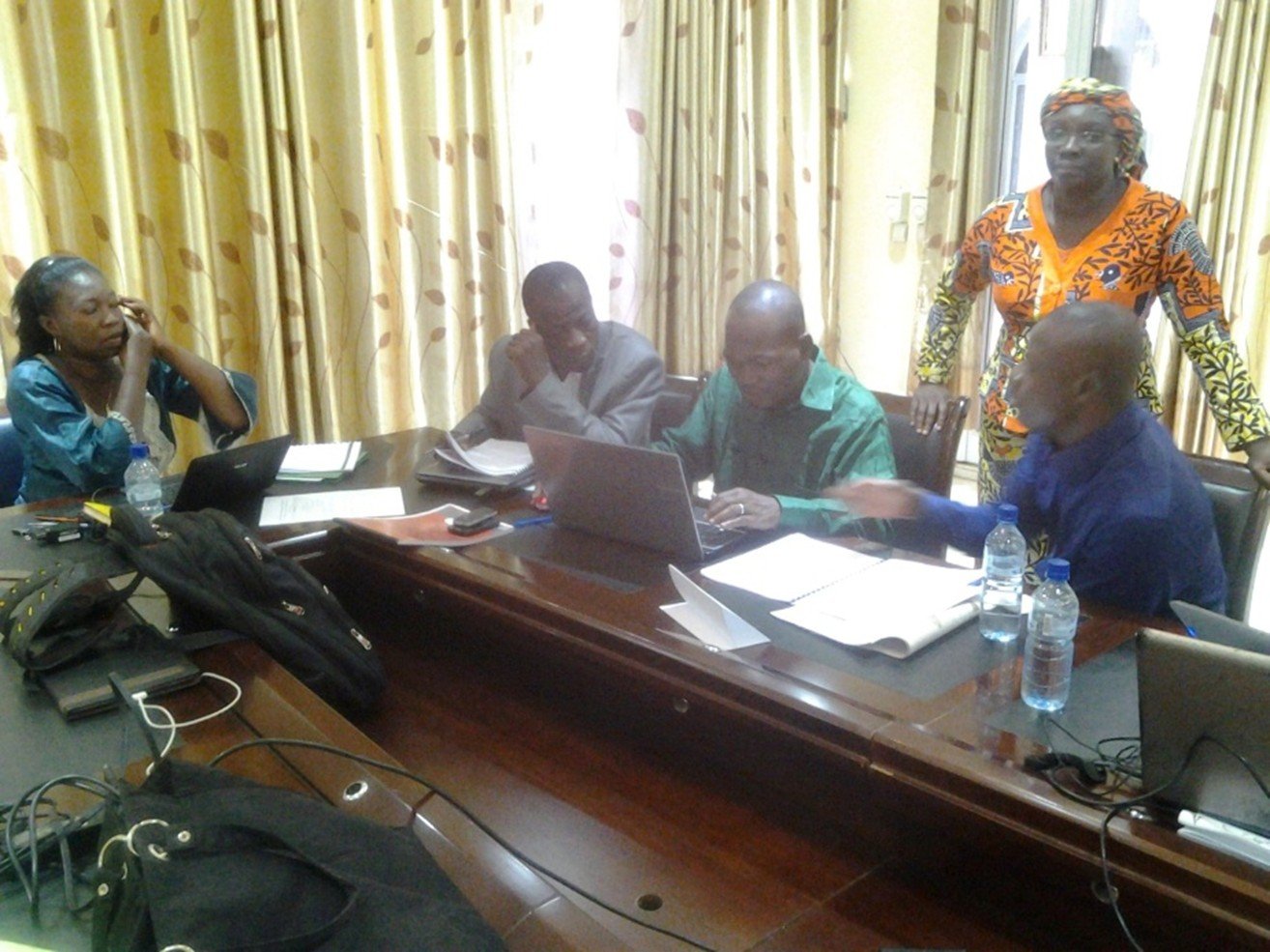
(See Table A for a list of the consultants’ expertise, and Photo Essay A)

Table A. ACSD Core Consultants: Local Capacity Strengthening

Expertise

Della E. McMillan

Rakiswendé Léon Ouédraogo

Fatimata Oulima Sinaré

Harold V. Tarver

Gérard Yessé

Issa Zerbo

Four-Phase LCapS Model


Phase One: Baseline Assessment/Mapping*


National Level


Regional Level


Recruitment & Training Regional Focal Points (for data collection & analysis)


Phase Two: OCA Surveys


National Level


Regional Level


For NGO-Managed Projects


Phase Three: Local Capacity Strengthening Strategy, Co-Development, Execution, & Monitoring


For National and Regional Donor-Funded Programs

For Specific NGOs/Projects


Phase Four: Training


Training Module Co-Development


Workshop/Training Program Co-design and Execution


–Online


–In-Person


–In French


–In English


–Multilingual (with translators)


–Design/Execution of Certification Programs


–Design/Execution of “Real-Time” & Post-Training Impact Assessment Tools


Other


Preparation of Proposals and Donor Reports that Include Local Capacity Strengthening


University Linkage Programs that Focus on Strengthening Local Capacity to Design and Execute Donor-Funded Activities


Design and Management


MEAL/Evaluation


* Baseline census of past, current, and potential local partners working in specific technical domains (humanitarian assistance, good governance, resilience, health).
Source: ACSD consultant database, February 24, 2026.


In 2023, Gerard Yessé developed a regional online certification program through the consulting firm Humanis Expertise and Consulting in Burkina Faso. The course—"Géopolitiques et Sécurité”—enrolled 44 students from x countries in West and Central Africa. The classes met online for one-hour per week and included homework and two comprehensive tests over a nine-month period. Thirty-nine of the 44 students completed the course and received the certificate (Source: Gerard Yessé).

In 2023, Gérard Yessé developed a regional online certification program through the consulting firm Humanis Expertise and Consulting in Burkina Faso. The course—"Géopolitiques et Sécurité”—enrolled 44 students from seven countries (Mali, Niger, Burkina Faso, Chad, the Republic of the Congo, DRC, and CAR) in West and Central Africa. The classes met online for one hour per week and included homework and two comprehensive tests over a nine-month period. Thirty-nine of the 44 students completed the course and received the certificate. (Source: Gérard Yessé)
Fatimata Ouilma Sinare lobbying for simplifying the judicial procedures for voluntary interruption of a pregnancy under the conditions allowed by Burkinabe Law during the time she was the coordinator of the project "Promotion des Droits Sexe et Reproductifs" financed by Pathfinder International. (Source: Fatimata Ouilma Sinare).

Fatimata Ouilma Sinaré lobbying for simplifying the judicial procedures for voluntary interruption of a pregnancy under the conditions allowed by Burkinabe Law during the time she was the coordinator of the project "Promotion des Droits Sexe et Reproductifs" financed by Pathfinder International. (Source: Fatimata Ouilma Sinaré)

Fatimata Ouilma Sinare lobbying for simplifying the judicial procedures for voluntary interruption of a pregnancy under the conditions allowed by Burkinabe Law during the time she was the coordinator of the project "Promotion des Droits Sexe et Reproductifs" financed by Pathfinder International. (Source: Fatimata Ouilma Sinare).

Fatimata Ouilma Sinaré lobbying for simplifying the judicial procedures for voluntary interruption of a pregnancy under the conditions allowed by Burkinabe Law during the time she was the coordinator of the project "Promotion des Droits Sexe et Reproductifs" financed by Pathfinder International. (Source: Fatimata Ouilma Sinaré)

Fatimata Ouilma Sinare lobbying for simplifying the judicial procedures for voluntary interruption of a pregnancy under the conditions allowed by Burkinabe Law during the time she was the coordinator of the project "Promotion des Droits Sexe et Reproductifs" financed by Pathfinder International. (Source: Fatimata Ouilma Sinare).

Fatimata Ouilma Sinaré lobbying for simplifying the judicial procedures for voluntary interruption of a pregnancy under the conditions allowed by Burkinabe Law during the time she was the coordinator of the project "Promotion des Droits Sexe et Reproductifs" financed by Pathfinder International. (Source: Fatimata Ouilma Sinaré)

Fatimata Ouilma Sinare lobbying for simplifying the judicial procedures for voluntary interruption of a pregnancy under the conditions allowed by Burkinabe Law during the time she was the coordinator of the project "Promotion des Droits Sexe et Reproductifs" financed by Pathfinder International. (Source: Fatimata Ouilma Sinare).

Fatimata Ouilma Sinaré lobbying for simplifying the judicial procedures for voluntary interruption of a pregnancy under the conditions allowed by Burkinabe Law during the time she was the coordinator of the project "Promotion des Droits Sexe et Reproductifs" financed by Pathfinder International. (Source: Fatimata Ouilma Sinaré)

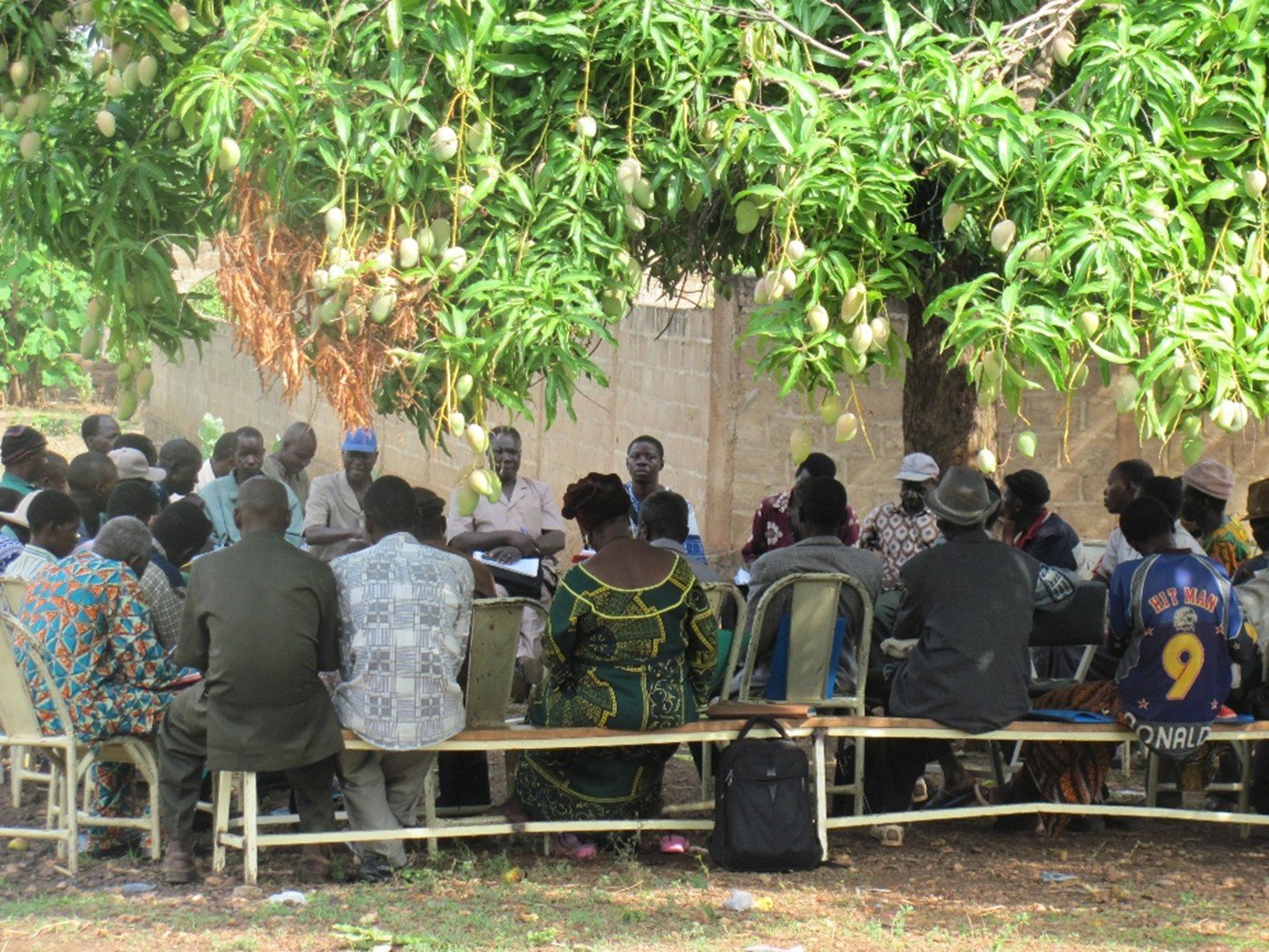
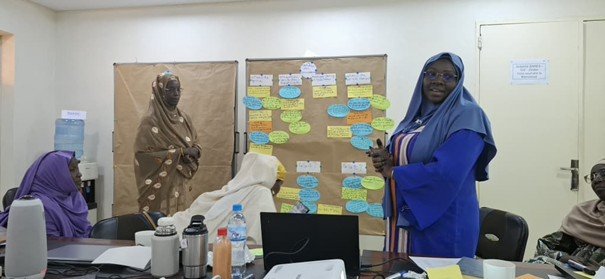
Issa Zerbo training community leaders who have been tasked with disseminating information on the new land tenure laws (LOI 039) in the commune of Kampti in 2011. This activity was supported by the MCA/BF Land Tenure Project (picture above). This training included small-group breakout sessions (picture below). (Source: ACSD photo archive).

Issa Zerbo training community leaders who have been tasked with disseminating information on the new land tenure laws (LOI 039) in the commune of Kampti in 2011. This activity was supported by the MCA/BF Land Tenure Project. This training included small-group breakout sessions. (Source: ACSD photo archive)

A group of people engaged in discussion around tables, with a presenter standing and holding papers in a seminar-like setting.

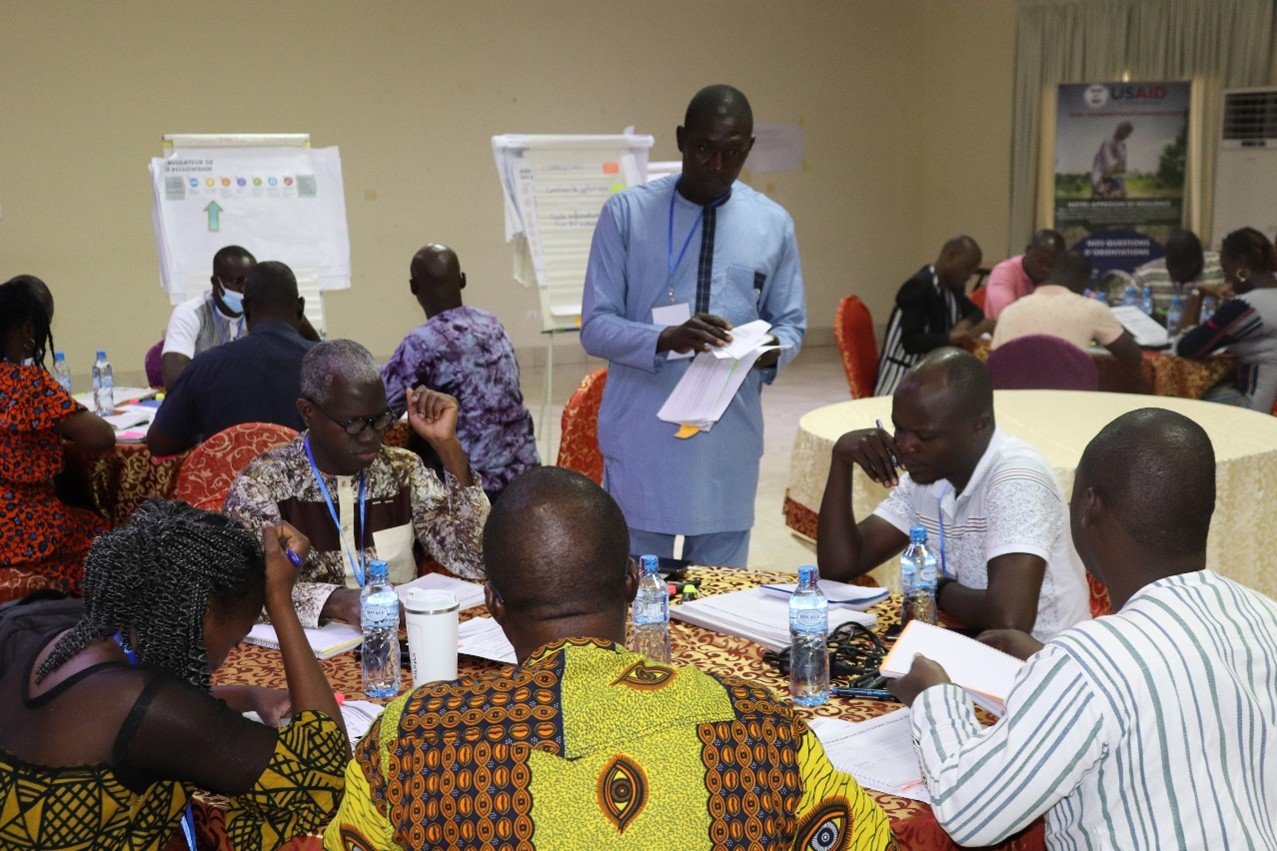
Rakiswendé Léon Ouédraogo facilitating an in-person training for staff associated with USG-funded projects on the new RCLA (Resilience, Collaboration, Learning, and Collaboration) methodology. Fellowship RCLA at Koudougou in October 2023. (Source: Rakiswendé Léon Ouédraogo)

ACSD’s experience with LCapS has helped identify some of the unique challenges that international partners are likely to face in fragile areas of the Sahel and to co-develop ways to manage these.

See the two case studies below for: 1) a short list of special challenges and lessons learned from the LCapS survey; as well as 2) the authors, titles, and content of the five training modules that were co-developed with local experts to respond to the major needs identified in the OCA survey.  See Photo Essay B to see pictures of the LCapS focal points conducting the OCA surveys in October 2024.

The same LCapS experience enabled ACSD to create a database of 647 local partners in eight regions of Burkina Faso that includes more detailed information on 212 of the most viable USG partners in a short period of time (four months). Our company knows how to create this type of database—its strengths, limitations, and management challenges.

(For information on three of the 212 groups that have granted us the permission to profile them, see following case studies.)

(Click below +names to open)

Every country—even the smallest and most impoverished ones in West Africa—has success stories like these, but they are often hidden and even these success stories may lack certain skills.

  • Ready to strengthen your local partnerships?
    Partner with ACSD to assess, build, and sustain the capacity of your local partners using proven, evidence-based methodologies.

Contact us to discuss how we can support your next program, investment, or portfolio with tailored capacity assessments and strengthening strategies.

For partnership inquiries or to explore collaboration, please contact us to continue the conversation.

ACSD

University-Based Capacity Strengthening

We strengthen the institutional and technical capacity of emerging university-based centers of excellence in Africa to establish and sustain high-impact partnerships with leading international universities and donors. These partnerships advance locally-led, sustainable development by driving research excellence, fostering innovation, and generating evidence-based solutions aligned with national and regional priorities. We achieve this impact by facilitating two categories of partnerships:

  • Government and Public Donors (Institutional) Funded Partnerships

One category of partnership is facilitated by international government donors like the USG, EU, or Norfund. Since 2010, ACSD consultant Harold Tarver has strengthened the capacity of eight universities in Côte d’Ivoire, Ghana, Nigeria, and Senegal to design and execute USG-funded development programs. This was achieved by linking each university with a set of interested US-based universities under the direct supervision of the USDA/FAS. These are widely heralded as an example of best practice for several reasons. One is the much higher percentage of donor funds that remained in the host countries (some as high as 70 percent). The other is the long-term sustainability and eventual scale-up of results in comparison with more conventional projects run through foreign consulting firms.

(See Table B below for a list of the nine university-based development initiatives funded by the USDA/FAS managed by Harold V. Tarver in Africa and Haiti from 2010 to 2023.   See Link A to Della McMillan’s web page for a full list of her institutional capacity strengthening highlights, including her work with various US and Africa-based universities and research insitutes.)

Table B. Nine University-Based Development Initiatives Funded by the USDA/FAS that Harold V. Tarver Managed in Africa and Haiti from 2010 to 2023


#

Countries

Non-US
Universities

US Universities

Years

Name of Project

1

Ghana

The University of Cape Coast

KSU

2010–2023

METSS

2


Kwame Nkrumah University of Science and Technology (KNUST)

URI &
DSU

2014–2023

ASSESS

3

Côte d’Ivoire*

Université Félix Houphouët-Boigny
l’Ecole Nationale Supérieure de Statistique et d’Economie Appliquée d’Abidjan
(ENSEA)

URI &
DSU

2014–2023

ASSESS

4

Nigeria**

The University of Ibadan

Purdue, UK, & OSU,*
URI, &
DSU

2010–2017

Nigeria Post-Harvest Project

5


The University of Ilorin

2010–2017

6

Senegal*

The University of Thiès (UT)

2014–2023

ASSESS

7


Université Cheikh Anta Diop de Dakar (UCAD)

2014–2023

8


Gaston Berger University (UGB)

2014–2023

9

Haiti***

The Faculty of Agronomy and Veterinary Medicine (FAMV), which is part of the State University of Haiti (UEH)

UC-Davis, Tuskegee

2010–2018

The Haiti PASA

Source: Harold Tarver, February 4, 2026.
AcronymsPASA: Participating Agency Service Agreement; ASSESS: Analytical Support Service and Evaluation for Sustainable Systems in Agriculture, Environment and Trade; METSS: Monitoring, Evaluation and Technical Support Services Project; KSU: Kansas State University; URI: University of Rhode Island; DSU: Delaware State University; UK: University of Kentucky; OSU: Oklahoma State University; UC: University of California.
Notes:

*The universities in Côte d’Ivoire and Senegal, along with KNUST, were part of a regional university network that USDA developed to support the ASSESS PASA.

**The Nigerian universities were part of the Stored Agricultural Commodities Initiative (SACI). SACI is a group of experts, drawn from industry and academia, with special interest on improving post-harvest handling of crops, food safety, and reducing post-harvest losses. We expanded the idea of working with two universities to create a network of academics to research post-harvest storage issues in Nigeria. 

***The Haiti project had many sub-projects that collaborated with different US universities.


  • Public-Private Donor Funded Partnerships

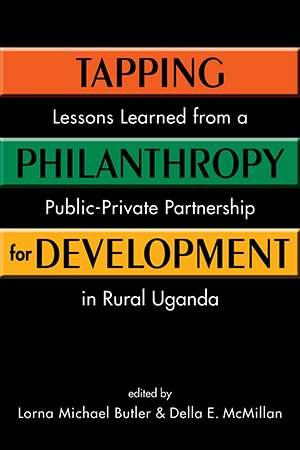
A second category involves private sector–funded partnerships and endowments.  Tapping Philanthropy for Development, Lessons Learned from a Public-Private Partnership in Rural UgandaOne of the best documented examples of this category of programming is the unique partnership that Iowa State University (ISU) co-created with Makerere University in 2002.  The program is referred to as the Center for Sustainable Rural Livelihoods (CSRL). Today—23 years after it founding—the CSRL Program continues to support student and faculty exchange and sustainable development  (in one district of Uganda) from the income generated by a large endowment that was co-developed from private–sector donors with links to ISU.  In 2015, ACSD Consultant Della McMillan and Lorna Butler produced a book that extrapolates a nine-step model that other universities (in Africa and the US) can use to build similar types of university linkage. (Tapping Philanthropy for Development, Lessons Learned from a Public-Private Partnership in Rural Uganda)

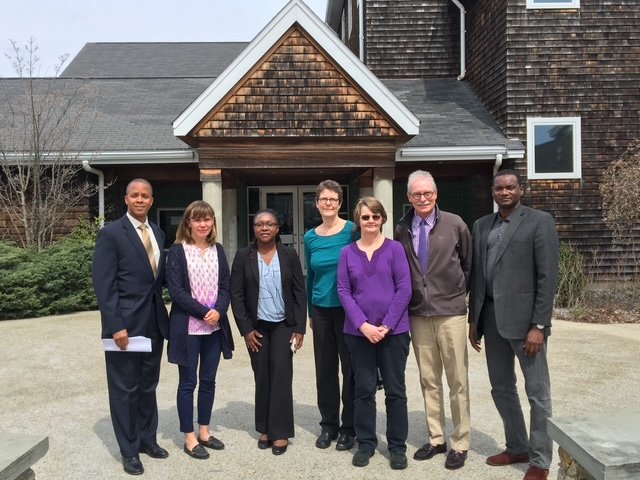
Harold Tarver, his USDA colleague, and the University of Rhode Island ASSESS Team meet at URI during USDA's Annual monitoring and partnership development visit in 2017. Photo credit: URI, Coastal Resources Center
Harold Tarver, his USDA colleague, and the University of Rhode Island ASSESS Team meet at URI during USDA's Annual monitoring and partnership development visit in 2017. (Source: URI, Coastal Resources Center)
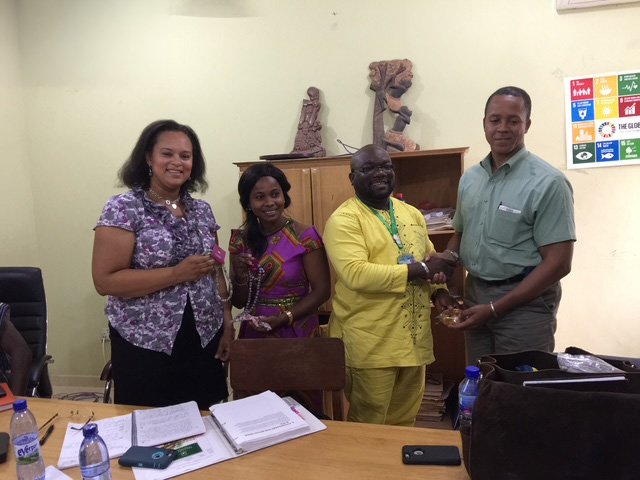
Harold Tarver at KNUST in Ghana during a routine supervision mission of the KNUST-URI joint partnership that executed the USG-funded ASSESS Project from year to year
Harold Tarver at KNUST in Ghana during a routine supervision mission of the KNUST-URI joint partnership that executed the USG-funded ASSESS Project from year to year. (Source: Karen Kent, URI)